

Back
hydroponic farm app design
Role
UX/UI Designer
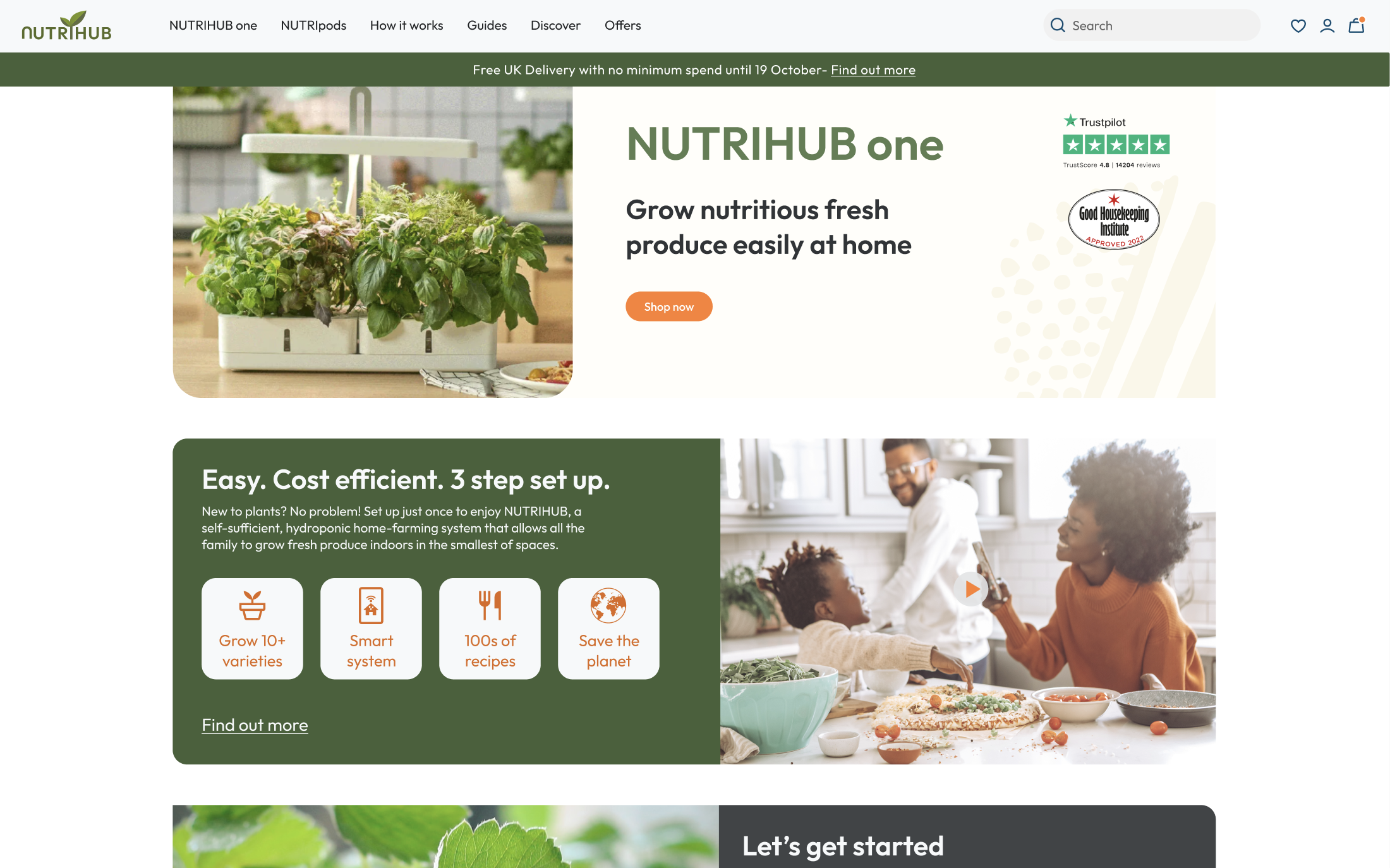
Nutrihub wished to build a digital product that enables users to manage and optimise their hydroponic home-farming systems. The ambition was to connect people to their food by enabling them to grow fresh, nutritious produce at home regardless of time or space constraints. This was a real brief from startup undertaken as part of the UX/UI Design 10 week course at Experience Haus.
- Research led to a focus on learning, play and reward
- Positive feedback recieved from startup CEO
- 1,500+ pieces of crafting content integrated seamlessly alongside product
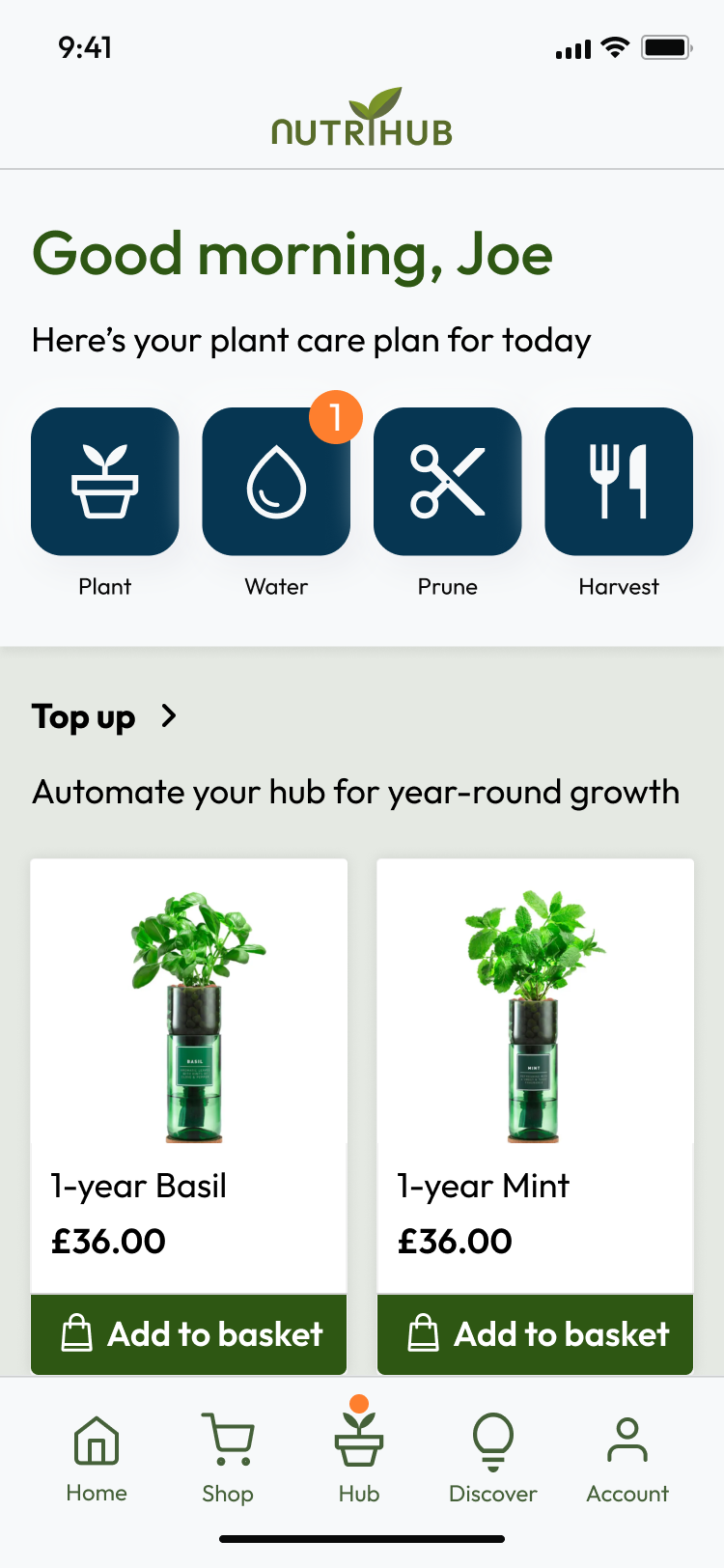
finished outcomes
research
Survey
I surveyed an initial 29 members of the public in alignment with the target demographic of Nutrihub. Over 75% did not currently grow fresh produce due to time or space constraints and a lack of knowledge. The top percieved benifits of using a smart garden were higher nutrition, nurturing new skills and reducing plastic waste.
Interviews
I surveyed an initial 29 members of the public in alignment with the target demographic of Nutrihub. Over 75% did not currently grow fresh produce due to time or space constraints and a lack of knowledge. The top percieved benifits of using a smart garden were higher nutrition, nurturing new skills and reducing plastic waste.
Competitor analysis
I surveyed an initial 29 members of the public in alignment with the target demographic of Nutrihub. Over 75% did not currently grow fresh produce due to time or space constraints and a lack of knowledge. The top percieved benifits of using a smart garden were higher nutrition, nurturing new skills and reducing plastic waste.
Early competitor analysis table reviewing available features of the hydroponic farm digital journey
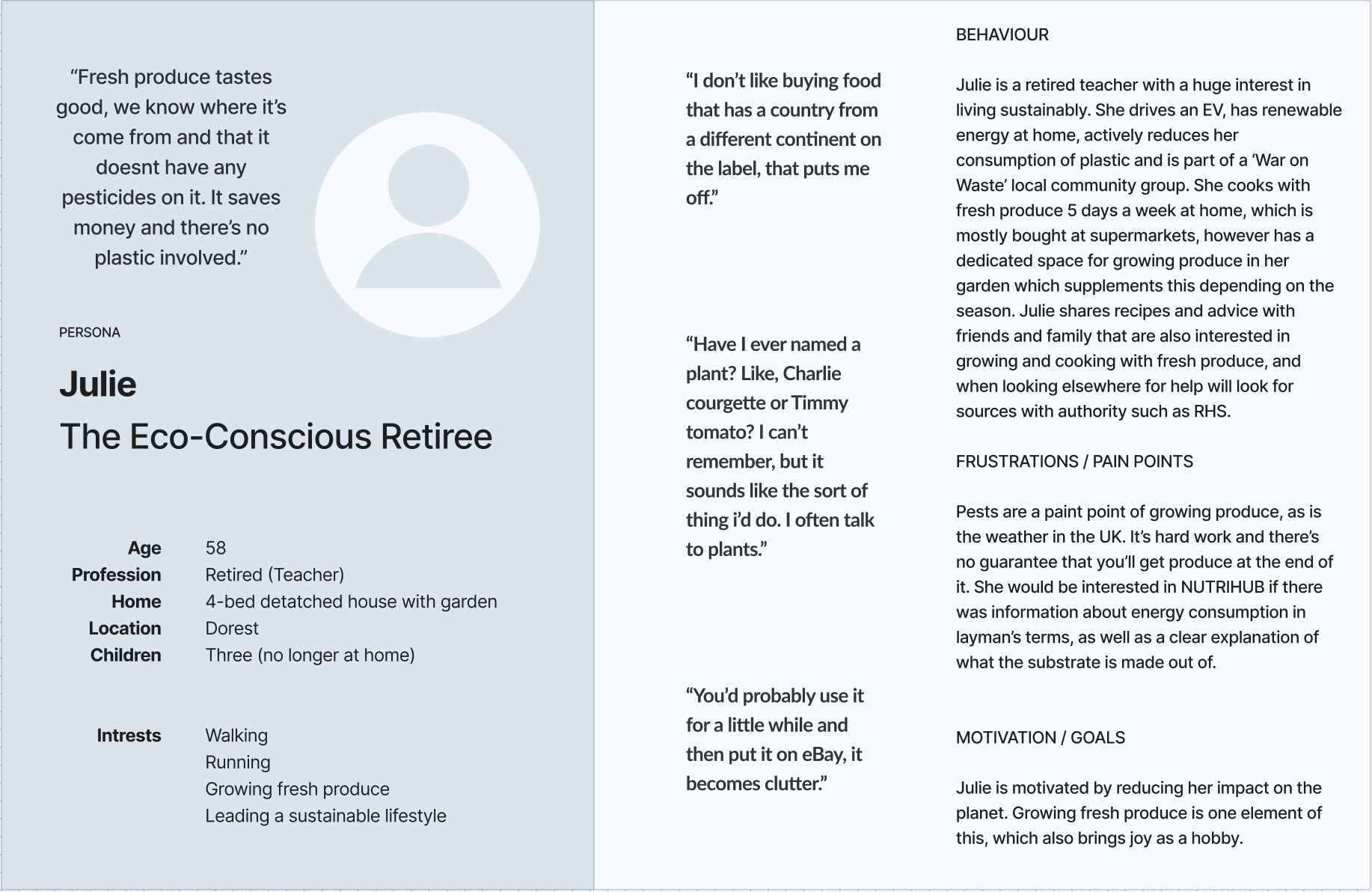
Early persona built from user interview
solution
Provide busy city-dwellers with limited outdoor space the opportunity to reconnect with the food that they consume and share with their community.
Persona card displaying key demographic, the passionate parent
Empathy map of a pick-your-own farm visit and resulting meal, highlighting key peaks and troughs to resolve
user journey 1: support of learning
User story
As a user and parent, I would like to create routines that empower my child to learn about growing food, and take ownership over the care of the plants within the Nutrihub.
Requirements
- Notifications
- Clear visual progress
- Character-led learning resources
- Sticker chart gamification
- Ability to share progress and save resources for later
Experience map for support of learning, plotting key screens and actions
Wireframes of key screens in the support of learning journey
user journey 2: energy insights
User story
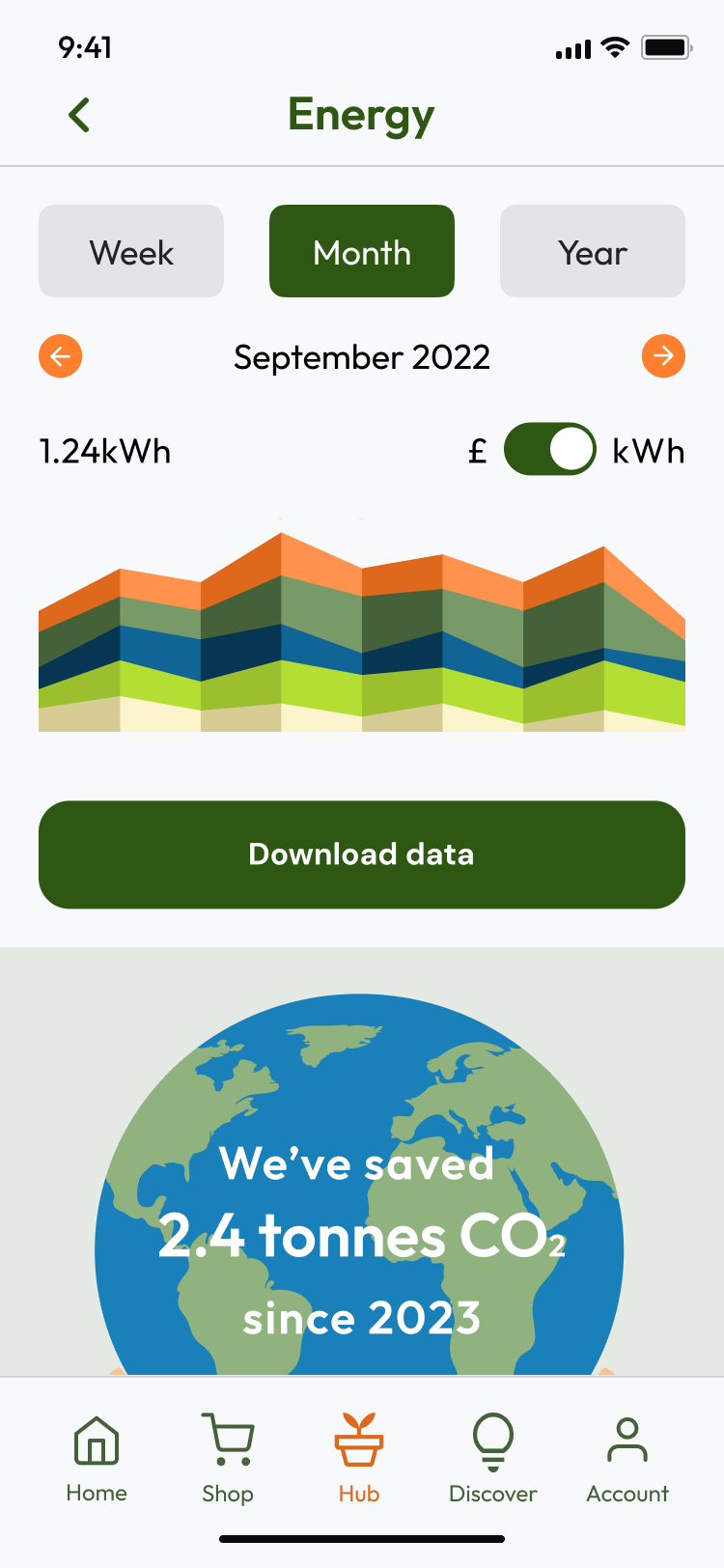
As a user, I would like easy access to information about how much energy I’m using, what that is costing me, and how that is negating my impact on the planet.
Requirements
- Clear visualisation of data
- Ability to refine timescales of insights
- Nutrihub collective savings
- Ability to share savings on social media and refer friends
Experience map for energy insights, plotting key screens and actions
Wireframes of key screens in the energy insights journey
user journey 3: inspire
User story
As a user, I would like to find inspiring recipes by filtering to ingredients that I have at home or am growing in my Nutrihub.
Requirements
- Recipes, guides and community posts
- Ability to search and filter by ingredient
- Simple recipe pages that do not require endless scrolling
- Ability to save recipes
Experience map for inspire, plotting key screens and actions
Wireframes of key screens in the inspire journey
branding
Non-product content
The keywords from research and stakeholder interview were playful, authoritative, and personal. From these words, I created a tone of voice and visual identity that represents a balance of needs for both the brand and audience with a particular focus on accessibility.
Colour contrast schematic with colour weighting wheel
Look and feel
I created a new logo for the brand, utilising letterforms and a strapline to
Final logo design and typography
Example assets harmonising texture and colour
testing
Non-product content
I built prototypes of the three app journeys to test with users of differing demographics.
Prototype of support of learning journey built in Figma utilising interaction tooling
Feedback
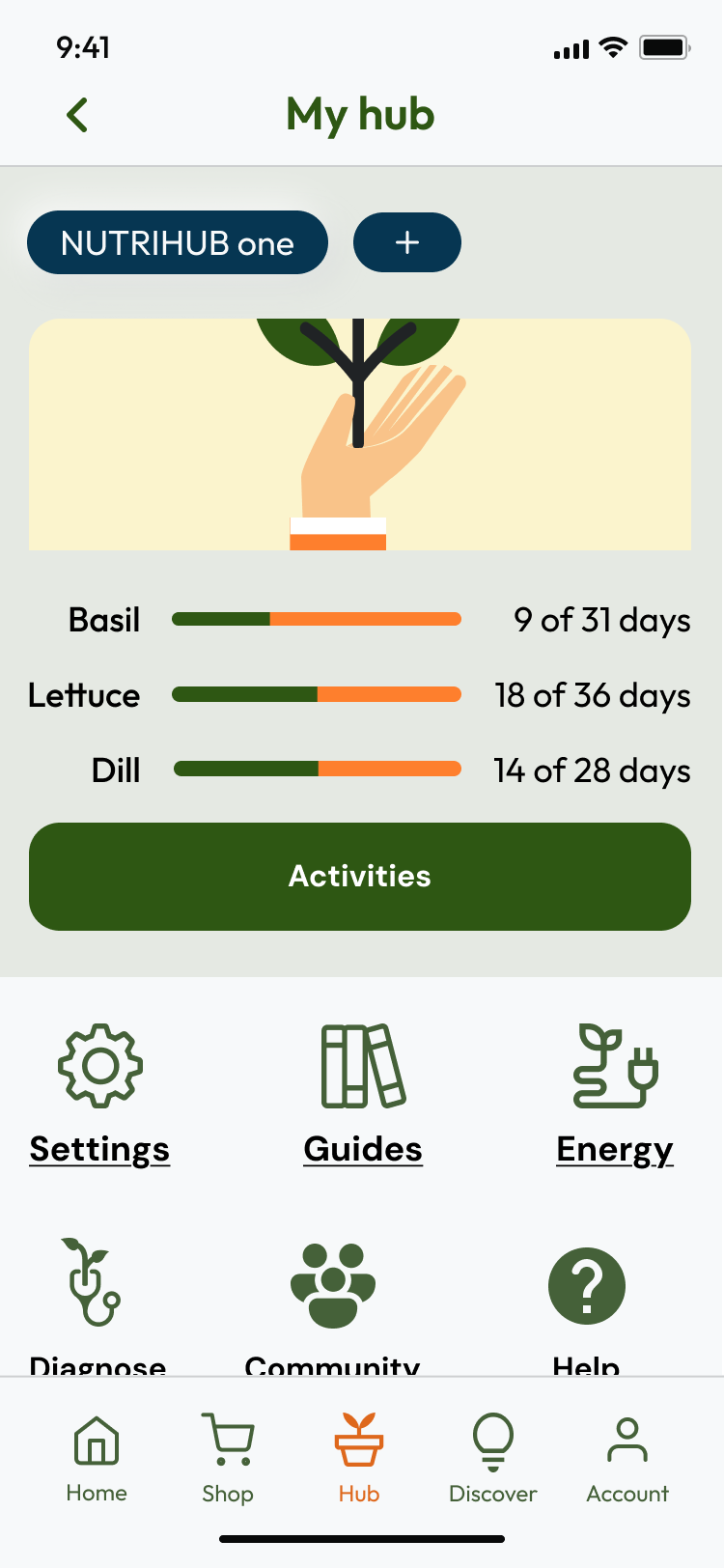
Users loved the branding, especially the characters created to make content more engaging. They found the features within the app helpful, although struggled to understand the meaning of the plant growth percentages on the homepage and ‘My Hub’ section. They liked seeing how much money they had saved by using the Nutrihub, rather than the amount of kWh saved.
Back
hydroponic farm app design
Role
UX/UI Designer
Nutrihub wished to build a digital product that enables users to manage and optimise their hydroponic home-farming systems. The ambition was to connect people to their food by enabling them to grow fresh, nutritious produce at home regardless of time or space constraints. This was a real brief from startup undertaken as part of the UX/UI Design 10 week course at Experience Haus.
- Research led to a focus on learning, play and reward
- Positive feedback recieved from startup CEO
- 1,500+ pieces of crafting content integrated seamlessly alongside product
finished outcomes
research
Survey
I surveyed an initial 29 members of the public in alignment with the target demographic of Nutrihub. Over 75% did not currently grow fresh produce due to time or space constraints and a lack of knowledge. The top percieved benifits of using a smart garden were higher nutrition, nurturing new skills and reducing plastic waste.
Interviews
I surveyed an initial 29 members of the public in alignment with the target demographic of Nutrihub. Over 75% did not currently grow fresh produce due to time or space constraints and a lack of knowledge. The top percieved benifits of using a smart garden were higher nutrition, nurturing new skills and reducing plastic waste.
Competitor analysis
I surveyed an initial 29 members of the public in alignment with the target demographic of Nutrihub. Over 75% did not currently grow fresh produce due to time or space constraints and a lack of knowledge. The top percieved benifits of using a smart garden were higher nutrition, nurturing new skills and reducing plastic waste.
Early competitor analysis table reviewing available features of the hydroponic farm digital journey
Early persona built from user interview
solution
Provide busy city-dwellers with limited outdoor space the opportunity to reconnect with the food that they consume and share with their community.
Persona card displaying key demographic, the passionate parent
Empathy map of a pick-your-own farm visit and resulting meal, highlighting key peaks and troughs to resolve
user journey 1: support of learning
User story
As a user and parent, I would like to create routines that empower my child to learn about growing food, and take ownership over the care of the plants within the Nutrihub.
Requirements
- Notifications
- Clear visual progress
- Character-led learning resources
- Sticker chart gamification
- Ability to share progress and save resources for later
Experience map for support of learning, plotting key screens and actions
Wireframes of key screens in the support of learning journey
user journey 2: energy insights
User story
As a user, I would like easy access to information about how much energy I’m using, what that is costing me, and how that is negating my impact on the planet.
Requirements
- Clear visualisation of data
- Ability to refine timescales of insights
- Nutrihub collective savings
- Ability to share savings on social media and refer friends
Experience map for energy insights, plotting key screens and actions
Wireframes of key screens in the energy insights journey
user journey 3: inspire
User story
As a user, I would like to find inspiring recipes by filtering to ingredients that I have at home or am growing in my Nutrihub.
Requirements
- Recipes, guides and community posts
- Ability to search and filter by ingredient
- Simple recipe pages that do not require endless scrolling
- Ability to save recipes
Experience map for inspire, plotting key screens and actions
Wireframes of key screens in the inspire journey
branding
Non-product content
The keywords from research and stakeholder interview were playful, authoritative, and personal. From these words, I created a tone of voice and visual identity that represents a balance of needs for both the brand and audience with a particular focus on accessibility.
Colour contrast schematic with colour weighting wheel
Look and feel
I created a new logo for the brand, utilising letterforms and a strapline to
Final logo design and typography
Example assets harmonising texture and colour
testing
Non-product content
I built prototypes of the three app journeys to test with users of differing demographics.
Prototype of support of learning journey built in Figma utilising interaction tooling
Feedback
Users loved the branding, especially the characters created to make content more engaging. They found the features within the app helpful, although struggled to understand the meaning of the plant growth percentages on the homepage and ‘My Hub’ section. They liked seeing how much money they had saved by using the Nutrihub, rather than the amount of kWh saved.
Back
hydroponic farm app design
Role
UX/UI Designer
Nutrihub wished to build a digital product that enables users to manage and optimise their hydroponic home-farming systems. The ambition was to connect people to their food by enabling them to grow fresh, nutritious produce at home regardless of time or space constraints. This was a real brief from startup undertaken as part of the UX/UI Design 10 week course at Experience Haus.
- Research led to a focus on learning, play and reward
- Positive feedback received from startup CEO
- Valuable end-to-end exercise to reinforce understanding of UX thinking in practice
finished outcomes
research
Survey
I surveyed an initial 29 members of the public in alignment with the target demographic of Nutrihub. Over 75% did not currently grow fresh produce due to time or space constraints and a lack of knowledge. The top perceived benefits of using a smart garden were higher nutrition, nurturing new skills and reducing plastic waste. Over 62% ate fresh food most of the time, and considered buying fresh and local important.
Interviews
I interviewed a further 8 members of the public to deep dive into their lifestyle, behaviours and beliefs. From the feedback, I used affinity and empathy mapping techniques to identify key pain points to inform the digital journey. Those that were most interested in the proposition were health conscious, with largely plant-based diets. They had an interest in sustainability and a desire to learn and share this learning with their wider community. They were looking for a balance between cost-effectiveness, nutrition, and convenience
Competitor analysis
Other hydroponic farm companies provide more than just the physical product, with plant subscriptions and accessories commonplace. They utilise video, infographics and user-generated content to engage and up-skill customers, often sharing widely on social media via influencer or industry experts. Reviews are prioritised on homepages to positively influence purchase.
Early competitor analysis table reviewing available features of the hydroponic farm digital journey
Early persona built from user interview
solution
Provide busy city-dwellers with limited outdoor space the opportunity to reconnect with the food that they consume and share with their community.
Persona card displaying key demographic, the passionate parent
Empathy map of a pick-your-own farm visit and resulting meal, highlighting key peaks and troughs to resolve
user journey 1: support of learning
User story
As a user and parent, I would like to create routines that empower my child to learn about growing food, and take ownership over the care of the plants within the Nutrihub.
Requirements
- Notifications
- Clear visual progress
- Character-led learning resources
- Sticker chart gamification
- Ability to share progress and save resources for later
Experience map for support of learning, plotting key screens and actions
Wireframes of key screens in the support of learning journey
user journey 2: energy insights
User story
As a user, I would like easy access to information about how much energy I’m using, what that is costing me, and how that is negating my impact on the planet.
Requirements
- Clear visualisation of data
- Ability to refine timescales of insights
- Nutrihub collective savings
- Ability to share savings on social media and refer friends
Experience map for energy insights, plotting key screens and actions
Wireframes of key screens in the energy insights journey
user journey 3: inspire
User story
As a user, I would like to find inspiring recipes by filtering to ingredients that I have at home or am growing in my Nutrihub.
Requirements
- Recipes, guides and community posts
- Ability to search and filter by ingredient
- Simple recipe pages that do not require endless scrolling
- Ability to save recipes
Experience map for inspire, plotting key screens and actions
Wireframes of key screens in the inspire journey
branding
Setting a tone
The keywords from research and stakeholder interview were playful, authoritative, and personal. From these words, I created a tone of voice and visual identity that represents a balance of needs for both the brand and audience with a particular focus on accessibility.
Colour contrast schematic with colour weighting wheel
Look and feel
I created a new logo for the brand, utilising leaves and a strap line to incorporate a clear brand ethos. Imagery used was fresh and bright, reflecting the colour palette. Texture and vector illustrations were introduced to bring life to the designs.
Final logo design and typography
Example assets harmonising texture and colour
testing
Prototypes
I built prototypes of the three app journeys to test with users of differing demographics.
Prototype of support of learning journey built in Figma utilising interaction tooling
Feedback
Users loved the branding, especially the characters created to make content more engaging. They found the features within the app helpful, although struggled to understand the meaning of the plant growth percentages on the homepage and ‘My Hub’ section. They liked seeing how much money they had saved by using the Nutrihub, rather than the amount of kWh saved.